
Property Verification & Trust·20 October 2026
How to Verify a Property Before Paying in Nigeria | Heimly
Learn how to verify property ownership, identify fake listings and agents, avoid real estate scams in Nigeria, and rent or buy property with greater confidence.
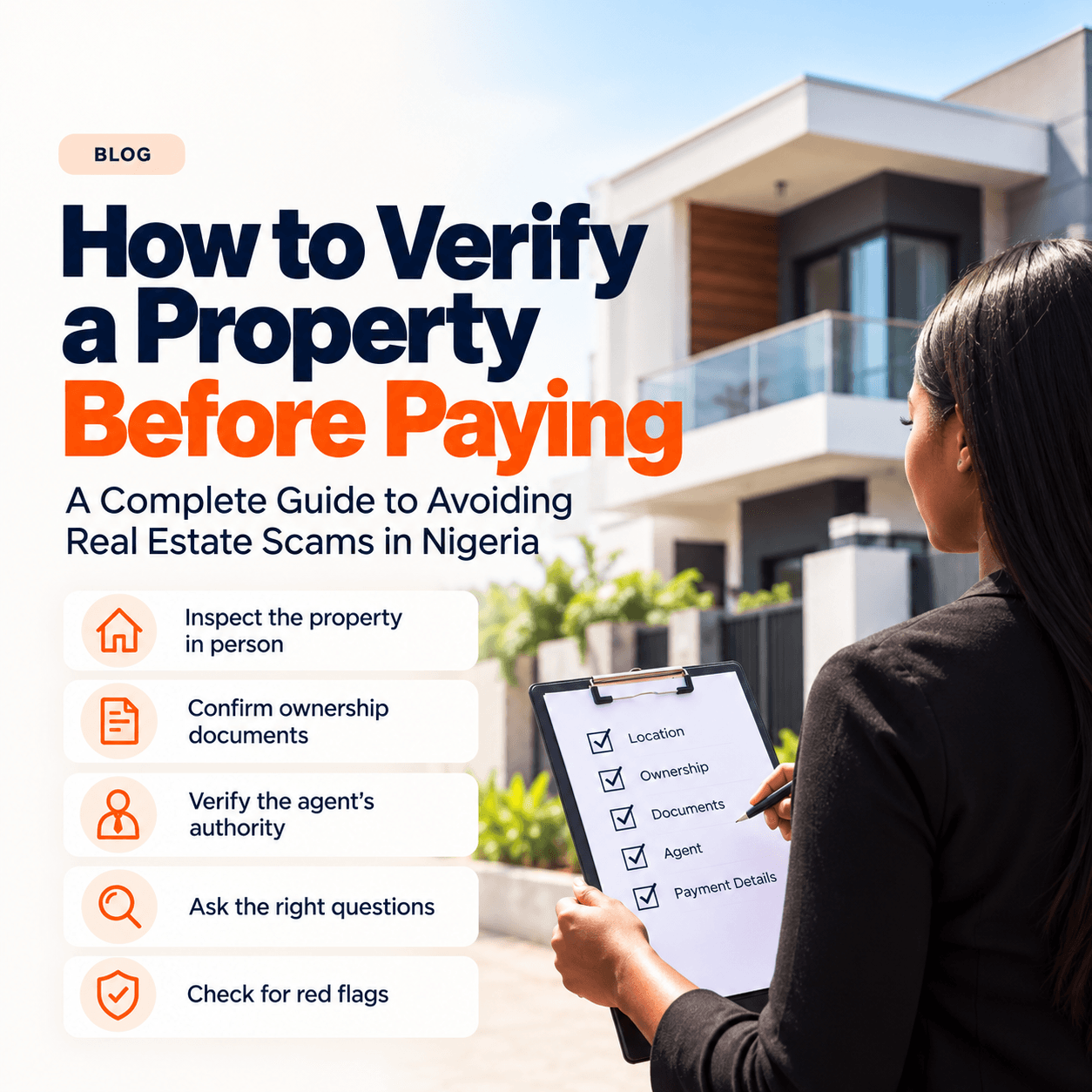
How to Verify a Property Before Paying: A Complete Guide to Avoiding Real Estate Scams in Nigeria
Meta description: Learn how to verify property ownership, identify fake listings and agents, avoid real estate scams in Nigeria, and rent or buy property with greater confidence.
Finding a house to rent or land to buy in Nigeria can be exciting, but making a payment without proper checks can expose you to fraud, financial loss, and legal disputes.
Fake property listings, misleading agents, disputed ownership, and pressure to pay quickly are some of the risks property seekers may encounter. Whether you are searching for an apartment in Lagos, a family home in Ibadan, or land for investment elsewhere in Nigeria, taking time to verify the property is essential.
At Heimly, we believe that finding a property should be easier to navigate and that better information can help people make more informed decisions. This guide explains how to verify a property before paying, recognise potential scams, and ask the right questions before committing to a transaction.
1. Why Property Verification Matters in Nigeria
Property verification helps you establish whether a property exists, whether the person offering it has the authority to do so, and whether the available documents support the claims being made.
Without proper checks, you could encounter situations such as:
Paying rent for an apartment that is not available.
Transferring money to someone who is not authorised to collect it.
Buying land with disputed ownership.
Paying multiple agents for the same property.
Discovering restrictions, encumbrances, or documentation problems after payment.
Being pressured into a transaction using misleading photographs or false claims.
A property advertisement is a starting point for your search, not proof of ownership or a guarantee that the transaction is safe.
2. How to Verify a Property Before Paying
Before paying a deposit, rent, agency fee, or purchase price, follow these steps.
Step 1: Visit the Property in Person
Whenever possible, inspect the property at its actual location. Confirm that the address matches the advertisement and check that the property exists in the condition described.
For a rental property, inspect the rooms, doors, windows, water supply, electricity arrangements, drainage, access roads, and general condition. If you cannot visit personally, ask a trusted representative to inspect it and arrange a live video walkthrough.
Be cautious if the advertiser repeatedly refuses a physical inspection or offers excuses for why the property cannot be viewed.
Step 2: Confirm Who Owns the Property
Ask the owner or representative to identify the legal owner and explain their authority to rent or sell the property.
Depending on the transaction, relevant documents may include a Certificate of Occupancy, registered deed of assignment, deed of conveyance, or other applicable title documents. The documents required depend on the property's location, history, and type of interest being transferred.
Do not assume that possessing a document automatically proves valid ownership. Documents can be incomplete, disputed, forged, or affected by subsequent transactions.
Step 3: Check the Property Documents Independently
For a land purchase or other significant transaction, engage a qualified property lawyer to review the documents and conduct the appropriate searches.
Depending on the property and its location, checks may involve the relevant state land registry, land bureau, survey records, planning authorities, or other government offices. A surveyor may also be needed to confirm the property's boundaries and survey details.
For example, if you are considering buying land in Lagos, seek advice on the appropriate checks with the relevant Lagos State authorities. Procedures and records differ across states, so do not rely on a document check performed for a different location.
Step 4: Confirm the Agent's Authority
If an agent is handling the transaction, ask for their full name, contact details, and evidence that they are authorised to represent the owner.
Where appropriate, contact the owner independently using verified contact details. Confirm that the owner knows about the transaction and has agreed to the terms being offered.
A professional-looking social media profile, business card, or identification document is not sufficient proof of authority on its own.
Step 5: Get the Terms in Writing
Before making payment, request written documentation that clearly states:
The full address and description of the property.
The names of the relevant parties.
The amount payable and what each fee covers.
The agreed payment terms.
The duration and conditions of a tenancy, where applicable.
The obligations of each party.
The process for issuing receipts and completing the transaction.
Have a qualified lawyer review important agreements, especially for land purchases and high-value transactions.
Step 6: Verify Payment Details
Confirm the recipient's identity and the purpose of the payment before transferring money. Ask for a formal receipt and retain copies of relevant messages, agreements, and transaction records.
Be particularly cautious when someone suddenly changes the payment account, insists that money must go to an unrelated third party, or refuses to provide a receipt.
Important: Do not make a payment simply because someone claims that other buyers or tenants are waiting.
3. How to Know If a Property Listing Is Fake
A fake property listing may use copied photographs, inaccurate descriptions, or a price designed to attract people quickly.
Watch for these warning signs:
The price is unusually low: The advertised rent or purchase price is significantly below comparable properties without a credible explanation.
The photographs appear elsewhere: A reverse-image search reveals the same photographs under different addresses or advertisements.
The location is vague: The advertiser refuses to provide enough information to identify or inspect the property.
Inspection is impossible: You are told to pay before seeing the property or verifying access.
The advertiser creates urgency: They claim that you must transfer money immediately to secure the property.
Details keep changing: The address, price, owner's name, or payment instructions change during the conversation.
Documents cannot be checked: The advertiser refuses reasonable verification or pressures you to trust documents without independent review.
One warning sign does not automatically prove fraud, but several warning signs together should prompt you to stop and investigate further.
4. Signs of a Fake Real Estate Agent
When searching for property, pay attention to how an agent communicates and handles verification.
Potential warning signs include:
They refuse to identify the owner or explain their relationship with the owner.
They demand payment before arranging an inspection.
They provide inconsistent information about the property.
They discourage you from consulting a lawyer or checking documents.
They demand unexplained fees or refuse to provide a breakdown.
They pressure you to transfer funds to an unrelated account.
They promise ownership or legal certainty without supporting documentation.
A legitimate agent should be willing to explain the process, clarify their fees, and allow reasonable checks. However, professional communication alone does not establish that an agent is genuine.
5. Questions to Ask Before Renting a House
Before agreeing to rent an apartment, ask the landlord or authorised agent the following questions:
Who is the legal owner of the property?
Are you authorised to rent it on the owner's behalf?
What is the total amount payable before moving in?
Are agency, legal, and other fees separate from the rent?
How long is the tenancy, and what are the renewal terms?
What is the process for paying rent and obtaining a receipt?
Who is responsible for repairs and maintenance?
Are water, electricity, waste collection, and other services available?
Are there additional estate or service charges?
When will the property be available for occupation?
Will I receive a written tenancy agreement?
For a safe way to rent a house in Lagos, apply these checks before paying, inspect the apartment yourself or through a trusted representative, and verify the agent's authority. The same precautions are useful when renting in Ibadan, Abuja, Port Harcourt, and other Nigerian cities.
6. What to Check Before Buying Land in Nigeria
Land transactions require particular care because ownership, boundaries, planning restrictions, and competing claims can be complex.
Before buying land:
Confirm the identity of the seller and their legal authority to sell.
Ask a qualified lawyer to investigate the title and relevant records.
Engage a surveyor to verify the survey plan, location, and boundaries.
Check whether the land is subject to a mortgage, dispute, acquisition, or other restriction.
Investigate applicable planning and land-use requirements.
Confirm that the proposed use of the land is permitted.
Ensure the sale agreement accurately describes the land and the transaction.
Obtain professional advice on the documents and steps required to complete and register the transaction.
Land documentation and title requirements vary. Do not rely solely on a seller's assurances, a community introduction, a survey plan, or a receipt as proof that the seller has a valid and transferable interest.
7. A Simple Property Verification Checklist
Use this checklist before paying for a rental property or land.
I have confirmed the property's actual location.
I have inspected the property or arranged a trusted inspection.
I have identified the owner or verified the representative's authority.
I have checked the relevant documents independently.
I have asked about disputes, restrictions, or outstanding obligations.
I understand all fees and payment terms.
I have reviewed the written agreement.
I have confirmed the payment recipient.
I know what receipts and transaction records I will receive.
I have sought legal or other professional advice where necessary.
If important checks remain incomplete, pause the transaction until you have the information needed to make an informed decision.
8. How Heimly Can Help You Navigate Your Property Search
Searching for a property often involves comparing locations, reviewing listings, contacting property owners, and communicating with real estate professionals.
Heimly is a property marketplace designed to connect people searching for properties with owners, landlords, agents, and other property professionals. It gives users a place to explore property opportunities and helps property owners and professionals get found by people looking for their next move.
When using Heimly, review the information provided in each listing, compare suitable options, and contact the relevant party to ask questions and arrange an inspection.
Remember that seeing a property on an online platform is not a substitute for independent title verification, confirming an agent's authority, inspecting the property, or obtaining professional advice. Complete these checks before making a financial commitment.
9. What to Do If You Suspect a Property Scam
If you suspect that a listing or agent is fraudulent:
Stop communicating payment details and do not send additional money.
Save the listing, screenshots, phone numbers, messages, and payment records.
Contact your bank or payment provider promptly if you have already transferred money.
Consider reporting the incident to the appropriate law-enforcement agency or relevant authorities.
Seek legal advice if you have signed an agreement or believe your property rights have been affected.
Where the listing appears on a platform, use its reporting channels to flag the suspicious content.
Acting quickly may help preserve evidence and improve the options available to you, although recovery of transferred funds is not guaranteed.
Final Thoughts: Verify First, Pay With Greater Confidence
Whether you are renting an apartment, searching for a home in Lagos, or planning to buy land in Nigeria, property verification should be part of every serious transaction.
Inspect the property, confirm ownership and authority, check relevant documents, review the agreement, and verify payment details before committing your money. If something feels suspicious, take time to investigate instead of allowing pressure to dictate your decision.
Heimly helps property seekers explore opportunities and connect with owners and real estate professionals. Start your property search, ask the right questions, and take the necessary verification steps before moving forward.
Ready to find your next property? Visit Heimly.ng to explore property opportunities and connect with the people involved in your search.
Find. Get found. Connect.

Vincentia Ubochi
Heimly


